|
Folk Dance Federation of California, South, Inc.
|
|
CLICK AN IMAGE TO ENLARGE
 FLAMENCO. The word conjures up images:
- An intense woman in a lavishly ruffled, polka-dot dress – her arms, body, hands tracing arabesques in the palpable space that surrounds her.
- A slim man dressed in black, taut, with contained energy ready to explode, torso pulled up, stamping into the floor.
- A raspy-voiced singer, so committed, so possessed, belief permeating every sound and facial feature and so strained that his neck cords look ready to burst.
- A guitarist whose now tender, now driving touch provides objective containment of the passion and incites it to further impossible reaches.
Flamenco is all this and more. It is narrowly an art of song, dance, and music that embraces jocularity, hilarity, and outrageousness as well as profundity.
Broadly speaking, some would call flamenco a way of life. Those born to it and a few unique outsiders experience it in such a total sense. Those not born to it however, can study the dance (baile), singing (cante), or guitar playing (toque) as one studies any dance or musical art form. Whether such students will mange to touch its inner core or not, they can still love it, grow in it, and experience something through it that is very special – and difficult or impossible to find elsewhere. They can become knowledgeable aficionados – fans of the art who support it and provide audiences for the artists.
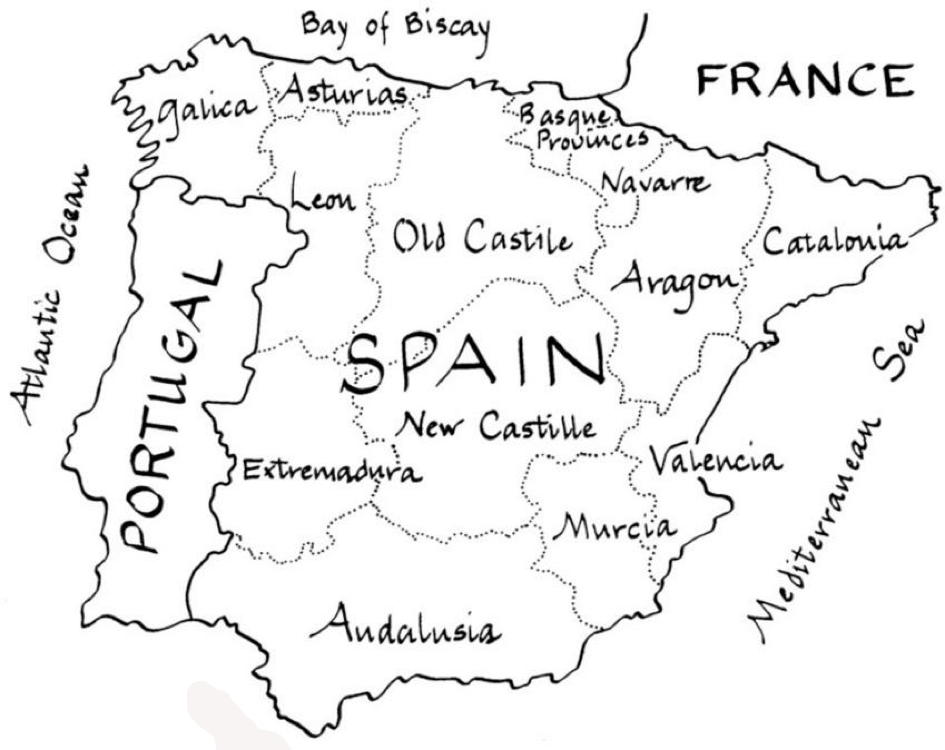
The roots of flamenco are in the distant past and somewhat shrouded in mystery. The art of flamenco developed among the Romani (Gypsies) of Andalusia in Southern Spain. Linguistic and cultural evidence proves that the Romani originated in India. They are believed to have begun to emigrate around 900 to 1000 CE. There was a general westward movement through the Middle East, along the land masses both north and south of the Mediterranean Sea, and into Europe. Around the 15th century, two Romani groups moved into Spain: one from Europe into Barcelona in the north, and the other from North Africa into Andalusia.
While the history of flamenco is inextricably tied to the history of the Andalusian Romani, it also embodies influences gained over the centuries from a number of other sources that include Celt-Iberian, Arabic, Jewish, Greek, Byzantine, native Spanish regional, Latin American – and in the last decade or two, modern Western jazz and pop, The term "flamenco" (with various theories as to its linguistic source) did not become widely used until the 19th century when Romani artists moved out from the traditional family/community settings of flamenco into the public cafes cantantes (night clubs that featured flamenco) of the cities. The second half of the 19th century witnessed what is called in all the histories a "Golden Age of flamenco," during which increasing numbers of non-Romani were introduced to the rhythm, emotion, beauty, and intricacies of flamenco.
Contrary to popular misconceptions outside of Spain, flamenco dance is not the only nor the single most important Spanish dance genre. Rather, it is one of four important (and inextricable linked) general categories of Spanish dance. The other three are:
- REGIONAL DANCE: the great variety of folk dances that are ingenuous to the fifty provinces that make up the fourteen regions of Spain. These traditional dances – that number into the hundreds – range from leaping jotas to the ramrod straight dance of the Basque provinces.
- ESCUELA BOLERA (bolera school, also called classical Spanish dance, or "school dance"): a collection of dances with regional roots, but that combine ballet technique with the Spanish dance vocabulary. Many date from the 18th century; they became dominant in Spanish art dances of the 19th century.
- NEO-CLASSICAL SPANISH DANCE: dances choreographed for the concert stage in the 20th century. They freely draw in movement vocabulary from flamenco, regional dance, or escuela bolero to tell a story, develop a mood, or simply create beautiful designs in space to beautiful music. The formal structure of each dance, however, depends on the music to which it is choreographed and the intent of the choreographer – this in contrast to the traditional flamenco, regional, or escuela bolera dances, all of which have set structures. The music most often used has been that of composers such as Isaac Albeniz (1860-1901) and Manuel de Falila (1876-1940), who themselves incorporated traditional flamenco and other Spanish musical elements into their classical musical compositions for orchestra, piano, or guitar. The historically most significant Spanish dancer of the 21st century, La Argentina (1888-1936), created the neo-classical Spanish dance genre as well as adapting traditional Spanish dances of the other genres for presentation on the concert stage.
 La Argentina established Spanish dance as a theatrical dance that won international acclaim. She performed in Europe, America and Asia, demonstrating to her audiences the creative potential of Spanish dance. She also developed the model of the Spanish dance concert that included all genres. Some of the notable Spanish concert dancers include Jose Greco, Escudero, Carmen Amaya, Antonio, Carola Goya & Matteo, Teresa & Luisillo, Maria Alba, Inesita, Lola Montez, Maria Benitiz, Pillar Rioja, and Roberto Amaral.
Most Spanish concert dance companies include all the varieties of Spanish dance on their programs, usually ending with a rousing cuadro flamenco (flamenco suite with the entire company on stage). The scene builds in intensity as each dancer performs in solos or couple dances his or her specialty. Variety and increasing excitement is sought in the mix of the light and the profound, the slow and the fast, the austere and the flamboyant. Those who are not dancing at the moment contribute to the emotional pitch with the shouts (jaleo), hand claps, and foot stamps by means of which the watchers both participate and encourage the performers. For particularly wonderous accomplishment, the shouts are not limited to simple "oles," but might include heart-felt statements such as "Blessed to the mother's milk that gave you sustenance."
The cuadro flamenco presented on stage is a theatrical adaptation of the juerga (the real flamenco jam session) in which the flamenco artists perform for themselves and each other. The real Romani juerga is difficult for an outsider to find – let alone be invited to. The stage quadro flamenco, whether in a formal concert setting or in a tablao (flamenco nightclub in Spain) is an attempt at best to emulate and re-create the spontaneous atmosphere of the real thing. At worst, it is a sham of faked emotion, and carefully orchestrated bombast. The staged quadro is the closest that many of us will manage to get to a real juerga. It is both remarkable and hartening, however, that there are juergo in both northern and southern California that are regularly organized and attended by local flamenco, singers, dancers, and guitarists be they Romani or not, Spanish or not. In such a setting, one can watch, participate with jaleo, dance, sing, play the guitar – whatever everyone can do.
 The flamenco dance repertoire includes relatively small number of dances. From the entire known history of the flamenco, one would have difficulty finding more than 30 to 40 dances. Of these, only some 10 to 12 are regularly presented in flamenco performances with perhaps another half dozen appearing occasionally. The most frequently scene currently are:
- In a compas (rhythmic pattern) based on twelve beats: alegrias, bulerrias, soleares, siguiriyas, and the non-flamenco but wonderfully lively sevillanas that has become ubiquitous in flamenco performances;
- In duple metre of various kinds: rumba flamenca (with Latin-American roots), dances of the tango family (different from the Argentine tango), la zambra, and zapateado.
Despite the rather limited selection of dance types presented in performances or taught in flamenco dance classes, neither audience, dancers, singers, nor guitarists seem to lose interest in the material. Quite the contrary. Flamenco illicits great, and long lasting, and fervent attention. It always seems to hold the potential for carrying one further in and on. Part of the reason must lie in the forms themselves, but part is surely in the fundamental characteristic of flamenco – that nothing is set, but rather improvised within an established structure. The dancer sets the speed and mood within the framework of the dance types and at various points signals the guitarist with a llamada (call) that communicates the intention to end one section and begin the next. The guitarist follows the lead of the dancer in these aspects, but in actuality, it is not so one directional. The guitarist, singer, dancer, and anyone participating with jaleo are responding to each other and to the state of their own feelings as they are affected by the collaboration of all together. Thus each rendition is an opportunity that will never come again and results in an absolutely unique event that will never be repeated. Because the communication, improvisation, and spontaneity are so crucial a part of flamenco, a student should seek to learn the components and how to use them rather than only set routines – especially beyond the beginning stage of study.
Flamenco began as the art of the Andalusian Romani – a minority of population in one country. By 1987, it has become an art with international appeal not only in western Europe and the Americas, but also in such unexpected places as Japan and South Africa. As with any art that spreads into a broader arena than its traditional context, flamenco has been and will continue to be influenced by cultural elements that make purists hair stand on end. Reactions to phenomena such as Madrid pop flamenco or the guitarist Paco de Lucía's excursions into jazz can be intense. There are people who will still complain about women performing zapateado (originally a man's dance) in trousers – although by now, that has been around for a long time. Whatever one's personal position on questions of adherence to tradition versus acceptance of change in a traditional art, change does go on – for good or ill – and if it did not, the art would seize to be alive.
 Flamenco dance is enjoying a period of rising interest and enthusiastic involvement – because of, at least in part, to the great success of the Carlos Saura/Antonio Gades flamenco films, "Carmen," "Blood Wedding," and the most recent, "El Amor Brujo." As La Argentina demonstrated the creative potential of Spanish dance in the early 20th century, Saura and Gades have brought that potential back into our consciousness in the 1980s. They have shown that the traditional flamenco forms can be adapted to new expressive purposes and still retain their integrity. Perhaps more importantly, they have reminded us that the dance is capable of communicating deep emotional truths and that the arts of flamenco are emotionally fulfilling in a unique way – whether one is am audience member or a full participant.
Flamenco dance is not like recreational folk dance – which can be picked up by many people at the beginning levels with a little, or sporadic, or no formal instruction. Flamenco is too difficult technically, rhythmically, and conceptually to be learned casually outside of its own cultural context. For those of us who are not an Andalusian Romani studied living in a place where flamenco is a regular part of life, it must be studied as ballet, or modern dance, or playing the piano, or singing opera must be studied. We payos (non-Romani) must start with the technical, because we have nothing else to start with. Serious study over a period of time, however, will lead to varying degrees of ability to practice the art creatively and with passion – and even perhaps to the occasional experience of duende (the spirit) without which flamenco remains an essentially empty shell of technique and style. The technique, rhythm, form, and movement vocabulary are all interesting and deeply satisfying to learn and perform, however, even if the upper reaches of the art are never attained.
Assistance in compiling the resource information was provided by Koco la Japonesa (Hiroko Minami), a University of California Irvine graduate student from Japan who is pursuing the flamenco duende.
Printed in Folk Dance Scene, May/June 1987


