|
Folk Dance Federation of California, South, Inc.
|
|
CLICK AN IMAGE TO ENLARGE
 Albania is divided roughly into two halves by the Shkumbin River. There are two major ethnic groupings, the Gegs and the Tosks. The Gegs, probably the closest surviving ancestors of the ancient Illyrians, live to the north of the river, and the Tosks to the south. In addition, there are smaller groupings of Labs, Cams, and Greeks who live south of the Shkumbin.
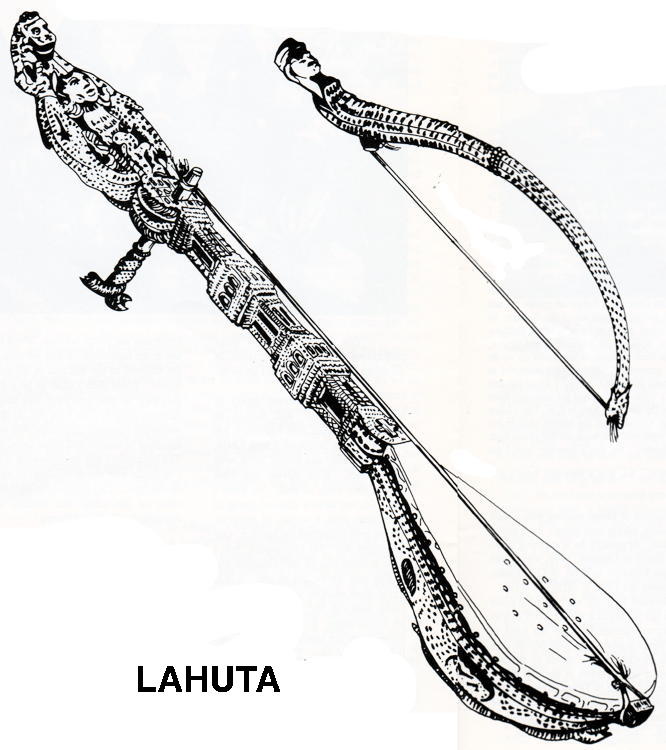
The music, songs, dances, instruments, and folk costumes of the north are distinctly different from those in the south. North of the river, the music of the Gegs is mainly hard heroic, and rigidly one-voiced (homophonic). The heroic songs, or kângë trimnije, are chronicles of events or episodes in a particular region of Albania. Often, they tell of vendetta murders or of murder for the protection of women. The underlying motif is honor – murder done to reclaim lost honor. They reveal a society permeated by the old traditional law of the mountain where honor is he highest ideal and shame worse than death. Other themes center around the Albanian wars with the Turks and the Montenegrins. One such cycle, found in northern Albania, Kosovo, and Metohija is the Këngë Kreshnikësh (Mujo-Halil cycle), that centers around the heroism of two brothers, Mujo and Halil, during the wars between the agas (warriors) of Jidbina. This "Songs of the Frontier Warriors" cycle is accompanied by the lahuta (single-stringed bowed instrument).
In contrast, the music of the Tosks, Labs, and Gegs south of the river is, for the most part, soft, lyrical, and polyphonic. The polyphonic singing style of the southern groups varies. The songs may be sung in two, three, or even four parts, while the iso (drone) may be intoned on a syllable or on words; it may be fixed on one sustained note throughout the piece or it may shift to effect harmonies or dissonances with the melody voices.
Nearly all singing is done in groups – ritual, work, lyrical, dance songs and ballads are all done in this way. Words to songs have changed since the country became socialist. Lullabies are sung emphasizing the baby's moral attributes, aptitudes, and future work for the benefit of the collective, rather than centering on the physical beauty and future self-interest of the child. In songs of lament, there are words to reflect the pride of a mother having a child who gave his/her life to the communal cause.
Throughout most of Albania, the musical folklore is quite distinct and, in some cases, seems entirely original and unmatched elsewhere in Europe. Influence of Yugoslav and Greek folk music appears only along the borders.
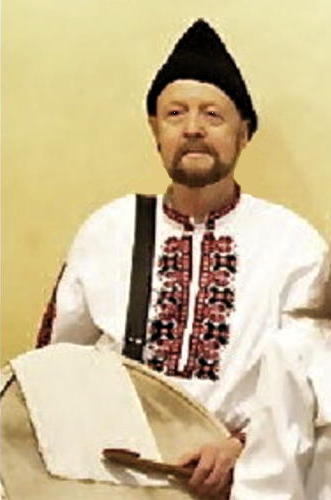
When asked if he could explain the differences between Albanian music and that of the neighboring countries, and what was so special about Albanian music, Ian said, "Around the borders, you can find some similarities. Especially around the borders of Albania, you have some Macedonian villages within the political boundaries of Albania. You also have Greeks living in southern Albania. But, what is it about it? That's a hard question to answer. They really developed polyphony to a fine art in the south, a very complicated kind of polyphony. How they developed it, I really don't know. The Greeks also do polyphonic singing, but there's a difference between the polyphony of Greece and that of Albania. I think the Albanians have developed it to a much higher degree. It becomes very complex when you have four-part polyphony. You have a lead voice, you have a voice that does a kind of backup to that, and then you have a varying drone, and then you have another drone backing that up as well. The Bulgarians also do polyphony, but it's still not as complex as Albanian. There are other countries that have highly complex polyphony, such as Georgia and Sardinia, but the Albanians polyphony is quite unique. Also, the instrumentation, the kinds of ways in which the instruments are used, and some of the instruments themselves are different. It has a completely different feeling for me. It doesn't negate the music of Bulgaria and Greece and other places, its just that there's something about Albanian that really gets under my skin more than others. I'm not a great academic, and maybe an academic ethnomusicologist could explain it to you in precise terms, but I can't."
In the past, Albania's economic dependence was based upon sheep and goat rearing. Because of this, shepherd's instruments form the most important group of musical instruments in the country. Fundamental to this group are members of the woodwind flute family (fyej), that can be subdivided into two types – those with a fipple and, more interestingly, end-blown flutes called kavali (kaval). There also are various small, single-reed instruments found throughout the country that are made from stalks of cane.
Along Albania's eastern borders and in the extreme northwest, the gajda (bagpipe) can still be found. Although much of the bagpipe music shows a strong resemblance to that played in Yugoslavian Macedonia, there is a distinct style of playing that seems to be particularly Albanian and where many of the pieces played have more portamento (sliding smoothly from one pitch or tone to another) in their execution.
Throughout northern and parts of central Albania, the Gegs use a plucked two-stringed lute called a Çifteli. The instrument has a small, pear-shaped body made from one piece of wood, a thin wooden soundboard, and a long neck with anywhere between eleven and thirteen frets. The instrument's two strings can be tuned in various combinations, but the most common is to have them a fourth apart. The melody is played on the upper string, and the lower acts as a drone. From this same family is the sharki, a much larger instrument witha deep, rich tone. It usually has five strings tuned (from low to high ff C gg), and again, the melody is played mainly on the high strings.
Instrument groups known as saz (a family of long-necked, plucked string instruments) in central and southern Albania consists of the lauto (that has a large pear-shaped soundbox, a long fretted neck bent at its uppermost part, lateral pegs, and four double strings tuned to cc GG dd aa), the def or daire (a large tambourine), a violin, and a clarinet. In some areas, the accordion is also included.
Printed in Folk Dance Scene, September 1992