|
Folk Dance Federation of California, South, Inc.
|

|
CLICK AN IMAGE TO ENLARGE
What has brought on this latest renaissance of Tango? In the early 1980's, two Argentineans, Claudio Segovia and Hector Orezzoli, were both working on various plays and theater pieces in Paris when they came up with the idea of presenting an old-fashioned Tango show on the Parisian stage and doing it as authentically as possible. They then proceeded to find the best Tango dancers, singers, and musicians.
Thus; in 1983, a neglected, century-old social dance astonishingly kicked and twisted its way back onto the world scene. Tango Argentino, from its initial performance, took Paris by storm. Two years later, it became an overnight sensation upon its opening in New York. The company of fifteen dancers, twelve musicians, and four singers performed to rave reviews everywhere. What was unusual about this stage show was that it had no props or scenery of any kind – just the talent of the performers. One thing that amazed the audiences was that the performers were not all young, slim, and athletic. Some of the very best dancers were definitely over fifty and no longer svelts.
The Argentine Tango danced socially in the salons (dance clubs) in Buenos Aires at the present time are tamed down from the exhibition style of the Tango. What is so different about Argentine Tango (as compared to the American and International styles) is that it is a dance of improvisation. The dancers learn the steps and are then free to put their own styling and interpretation into the dance. The most characteristic thing in the styling is the feeling of corazon (heart). The term mufarse is one of those words which apparently has no direct translation. It is used to describe the abject misery of the dancers – of how terrible life is and the fact that it will only get worse – and how they enjoy the misery.
 The history of the Tango is intertwined with the culture and traditions of the gaucho (Argentine cowboy). The gaucho was of mixed blood, Spanish, Black, and Indian. He was fiercely independent, led a nomadic life, had a contemptuous view of women, and rarely married. It is felt that he gave Tango its basic movement and style. Many Tango steps can be traced to movements made during knife fights, as the combatants circled each other, trying to gain the advantage. Each man originated his own steps and it was considered unmanly to copy another's steps. The large landowners began to squeeze them off the land, and as the gaucho population began to disappear, legends took their place. The gaucho became a hero to the poor immigrants in the port cities during the early 1900's.
Newly arrived Italian immigrants in the early part of the century sought their identity amid the slums of Buenos Aires, Argentina and Montevideo, Uruguay. They had a need to escape the hardships of life and to give vent to their frustrations. The immigrants could not buy land as they had hoped, and they could not afford to return home to Europe. The only way they seemed able to work out their frustrations was in the Tango.
The compradito, in reality a pimp dressed in flashy clothes (his impression of what the gaucho wore), was the first to do Tango as we know it. It was an urban dance confined to the bordellos of the working class neighborhoods. Tango's true proving ground was the alley where young machos (masculine) would learn the dance from each other. The true partner was not the female dancer, but an assumed rival who would be intimidated by the macho's dance steps. Tango was a battle. In the Tango bars, knife fights shared equal billing with the dancing, sex, and Truco (a popular card game).
Few dances have had quite as volatile a social history as Tango. Deriving from a melange of African, European, Cuban, Spanish, and Gaucho rhythms and dance forms, the Tango had to travel to France, England, and the United States (becoming the rage of international society) before gaining acceptance among respectable Argentineans.
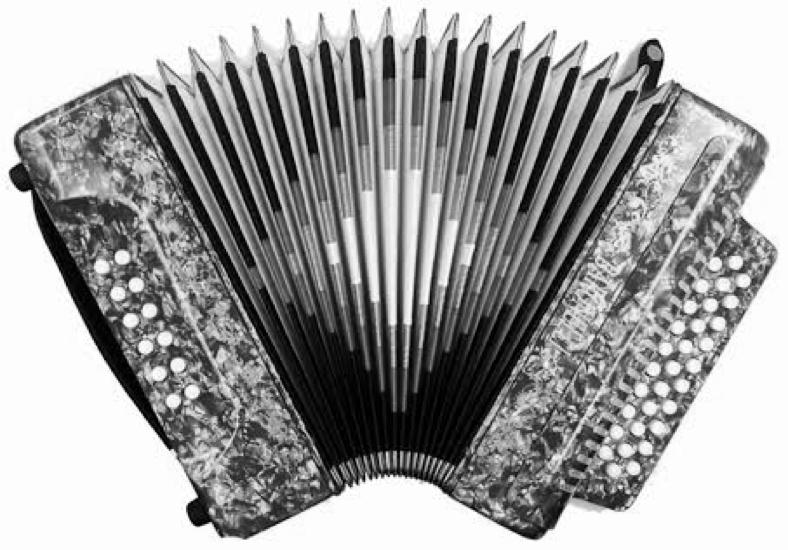 The bandoneon (button accordion) is called the "heart" of the Tango. It became the instrument that expressed the emotions inherent in the music. This instrument was invented in Germany in 1854 by Heinrich Band as a substitute for a church organ. The introduction of the bandoneon in Argentina around the turn of the century brought a significant change to the tempo of the music, and the real Argentine Tango was born. Both the body movements and the music of Tango are emotionally charged. Tango speaks of the feelings of the people who lived along the Rio de la Plata river, people unable to return to their homeland in Europe. The themes express the pain of unrequited love, frustrated dreams, and longing for the homeland.
Tango became the symbol of Argentina to the rest of the world, although initially the dance was associated with the low life of cabarets and brothels. It has been said that the choreography represented the sexual activities of pimps, prostitutes, and patrons. No self-respecting Argentine lady would be seen doing the Tango.
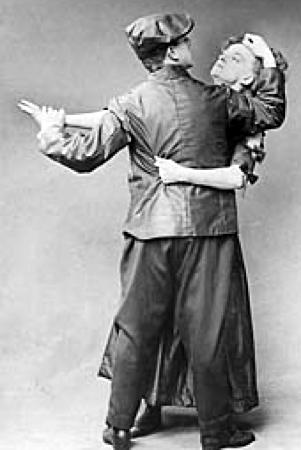 Montmartre was a Bohemian section of artists just outside of Paris. It was in a cafe there, Le Chat Noire, that the French Apache began. The Apache was not a social dance, but a dance performed by entertainers. It tells the story of a pimp who lays down his cards to grab his waitress girlfriend and demand her money. He slaps her around when she says she has none, then returns dispassionately to his gambling.
When wealthy Argentine men, who had learned Tango in the brothels of Buenos Aires, went to France and saw the Apache, it reminded them of the Tango. They decided to show the French their Tango, and by 1910, it was a sensation in Paris. Tango mania took over and Paris was dubbed "Tangoville." The French dance masters tamed the Tango, making it a smoother, quieter dance that genteel people could do. Tango travelled to England in 1911 and by 1913 had swept all dances before it.
From Paris, the Tango swiftly came to America. Americans, with their animation and exuberance, wanted to do Tango quickly. Tin Pan Alley obliged them by calling every One-Step and Foxtrot that came off the production line a Tango!
The dance team of Vernon and Irene Castle also helped popularize Tango in America. The Castles had just come from Paris where they were the "Toast of the Town." Their personalities and styling brought elegance and playfulness to the Tango.
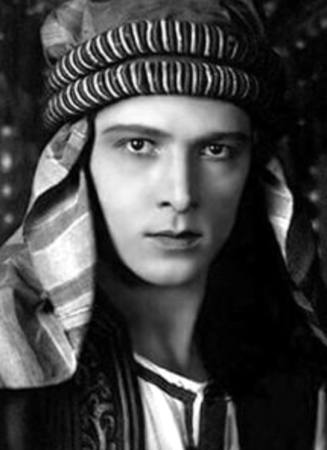 A different style Tango emerged in the 1920's, due largely to Carlos Gardel, an Argentinean, and Rudolph Valentino, an Italian immigrant to the United States. Gardel, a Tango singer and composer, became a star in Europe. Valentino became the silent film's "Latin Lover" and performed his version of the Tango in several Hollywood films.
 Gardel returned to Argentina around 1930 and became a star in sound movies. He became known as "The Voice of the Tango," and is still regarded as a folk hero throughout Latin America. Valentino is virtually synonymous with Tango in the United States, and his popularity is so great that on August 23, 1991, 150 fans attended a graveside ceremony commemorating the 65th anniversary of the death of this silent screen idol. There was even the legendary "Lady in Black" who laid red roses by his grave.
In 1930, Carlos Gardel heard the young genius Astor Piazzolla (who was 9 years old at the time). He was so impressed by Astor's playing that he asked Piazzolla to perform in various recordings for his movie, El Dia Que Mi Quieras. By 1960, Piazzola had formed a band called "Quinteto Nuevo Tango," and introduced the form of Tango now known as Nuevo Tango. Many of his compositions were included in Tango Argentino.
Each time Tango seemed to die, something would breathe new life into it. No other dance form has elicited so many styles. We now have American, International, and Argentine (with its intricate footwork, which came into being in the 1940s). We also seem to have come full circle, back to the gaucho concept of individual styling.
Printed in Folk Dance Scene, November 1991