|
Folk Dance Federation of California, South, Inc.
|
|
CLICK AN IMAGE TO ENLARGE
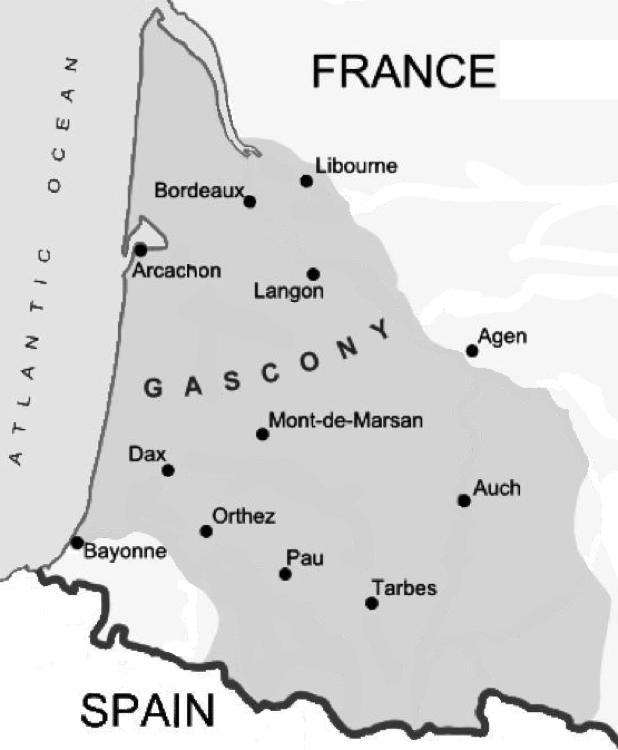
When we think of Gascon dances from the southwest of France, it is the rondeau which comes to mind as the quintessential Cascone dance, popular even until the first third of the 20th century. A dance in 6/8 or 2/4, the rondeau varies from town town and from region to region. Most often it was done in short lines of four people, with a man leading the line, followed by two women, ending with another man. The form of the dance is simple, allowing for improvisations. Usually the dance was done to singing, without any instrumental accompaniment. The words to the songs usually told a story or anecdote about everyday life, and were often, comical or mocking. There are also couple forms of the rondeau, with couples traveling clockwise in a circle, one couple behind the other, in a processional formation. Even when danced in a couple formation, the rondeau is considered a collective dance. One hypothesis is that the rondeau began as a closed circle, then eventually broke into an open circle and smaller lines, and finally into couples.
Another dance form specifically Gaston is the congo, or maren congo. However, similar dance forms are found in other parts of France, especially Brittany. Some trace the origin of this dance to the sailors who traveled on the rivers of France. According to stories by sailors, there was a dancing master on the ships to entertain the cruise; when the sailors returned home, they continued dancing. Some forms of the congo are danced in a quadrette formation and show signs of influence from the English contredanse. Congo can be a complicated dance form, with many different patterns, figures and displacements, and often involves "games" of flirtation among the dancers.
The branle, one of the oldest dance forms and often found in the ancient writings of the 13th century by the name of the dancse en rond, was a dance known throughout the mid Pyrenees region. Thoinot-Arbeau wrote detailed descriptions of the different forms of the branle in his Orchesographie in 1588. The branle was a simple dance done in lines of any number of dancers, and was simple in form, allowing for diversity within a rather limited structure.
During the second half of the 19th century, many "imported" dances, such as the waltz, schottische, mazurka, and polkabecame popular in the French countryside, but done to French regional tunes and often with regional styles. The waltz remained primarily the same in France, and it is only the melodies which would distinguish a waltz from Gascony from a waltz in the Limousin. The French dance styling for the waltz, however, was very flat and smooth. The polka as borrowed from abroad, stayed primarily the same except for the melodies and the specialty polkas that sprang up in different regions, such as Polka Piquee, Bebe, etc. The schottische and mazurka have been well integrated into the French musical and dance tradition and regional variants of these dances can be found throughout France.
Though many common traditional instruments are found throughout France, such as the violin, bagpipe, the vielle à rou (hurdy-gurdy), and the diatonic accordion, there are several instruments that are found exclusively in Gascony and Occitania.
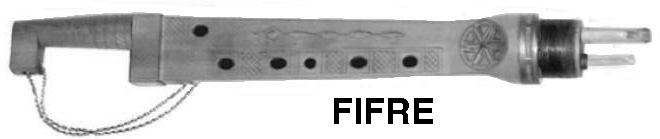
One of the most widely used wind instruments is the fifre (or lo pifre in the Gascon language). This instrument has a mouthpiece and six holes and belongs to the family of "cross" flutes (flûtes traversières), and is often accompanied by a small or big drum. It is used not only for dancing, but especially for traditional and official ceremonies such as the Maypole Celebration or on the occasion of conscripts going away to the army.
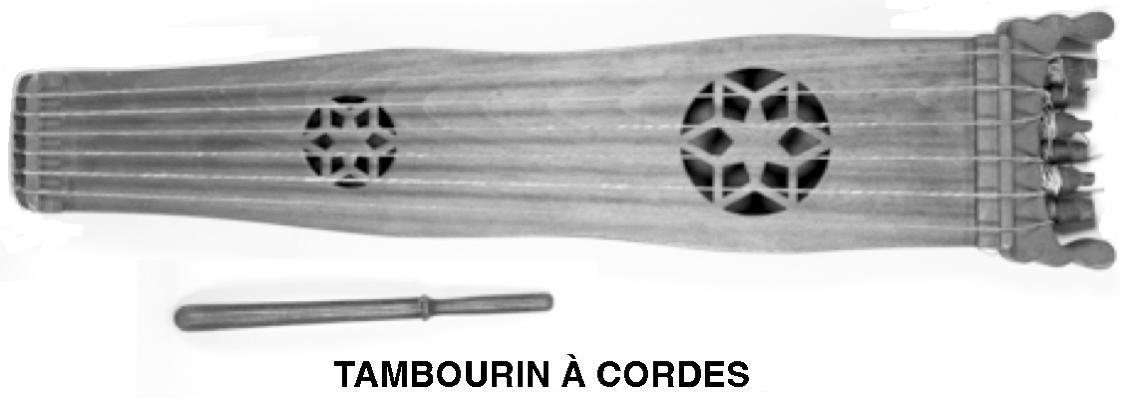
Another common instrument played in the Gascony is the flûte à troi trous (three-hole flute), similar to the Basque xixtu or the Provencal galoubet. Since only one hand is needed to play the melody, this instrument is often accompanied by the tambourin à cordes or ton-ton (string drum)string drum. This is a wooden instrument with six strings tuned in fifths. It is struck with a stick and acts as a percussion instrument to provide rhythm for a tune. These instruments were used not only for dancing, but also during Carnaval and to accompany the conscripts on their departure to the army.
The bagpipes are found throughout France (there are fourteen different types there, there is only one which is typically Cascon, from the area called the Lande. This landaise cornemuse (or boha) has a bag, a mouthpiece (bouhet) a chanter (pihet with a simple read and six holes (five in front and one behind for the thumb) to play the melody. The peculiarity of this bagpipe is that the drone is not in a separate bore of wood but in a parallel bore with the chanter. The drone also has a simple read and a single hole. There is not much information available on how these bagpipes were made, or on the technique of playing one. Only people over 80 years old today would have actually heard these instruments played.
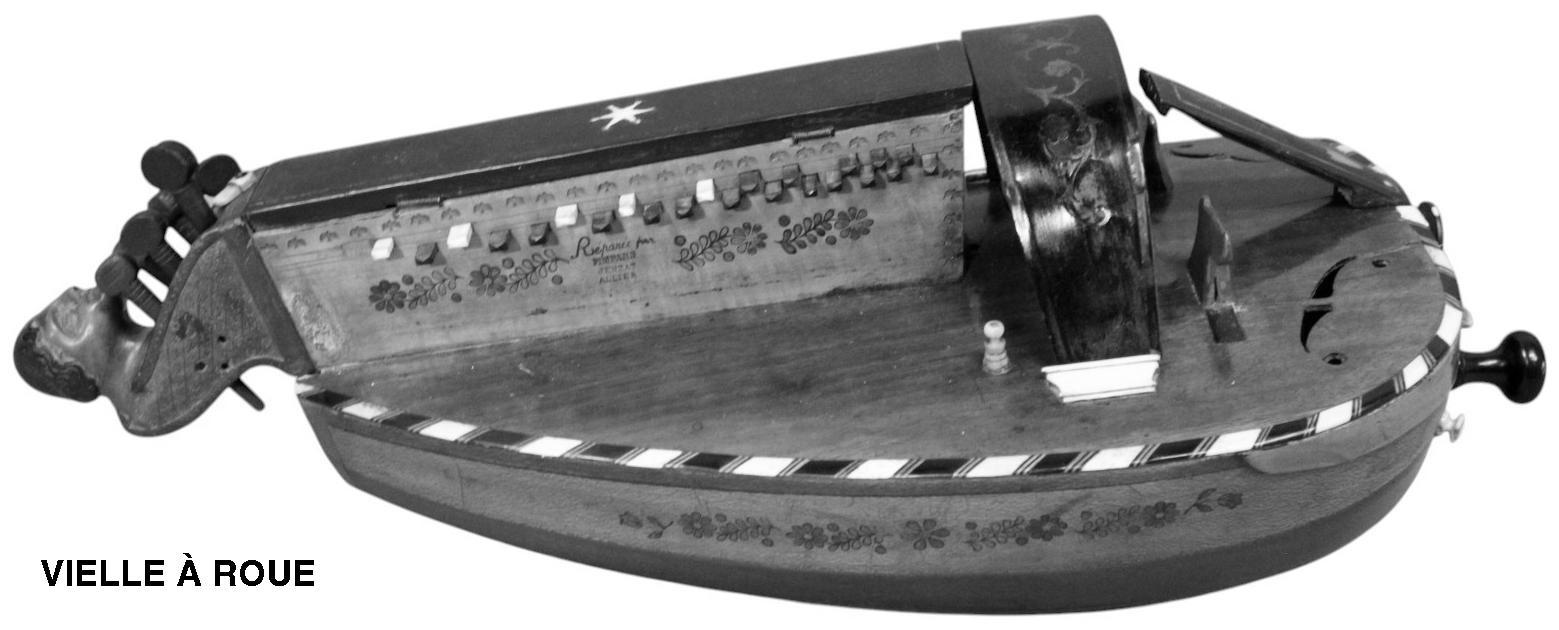
Though we think of the vielle à roue as an instrument primarily from the center of France, it is also an instrument played in Gascony. To describe this instrument is very difficult. It is a wooden instrument shaped like a guitar or a lute, with a convex arched back. There are six strings that are continually bowed by a wheel that is turned by a handle or a crank. There are two chanterelle strings that play the melody and four drone strings. The melody strings pass through a keyboard box. The keys are pressed and push against small wooden tangents that in turn push against the melody strings, lengthening or shortening them to produce notes (like fretting a guitar). The range of notes covers two octaves. The drones are not controlled by the keyboard and always sound the same pitch. One of the four drones has a special function which gives the vielle à roue it's uniqueness. This is the trompette string, which is mounted on a small piece of wood shaped like a "dog" (called le chien). the "dog "is not glued to the soundboard, but is held there by the tension of the trompette string. When one gives a little "torque" to the handle that turns the wheel, the "dog" is vibrated rapidly on the soundboard to produce a rhythmic buzzing sound. Thus, the vielle à roue is an instrument that can play the melody, drone, and rhythm at the same time.
Though many of the regional dances and instruments of Gascony died out as a living tradition after World War II, they have enjoyed a "revival" in the 1960s, 1970s, and until the present day by a new generation of young dancers, musicians, and instrument makers.
Bibliography
"La Danse en Midi-Phyrenees" by Pierre Corbefin in Musique et Voix Traditionnelles Aujourd'hui, Vol. 2, published by the Conservatoire Occitan, Toulouse.
Musique en Sentiers: Traditions, Instruments et Musiciens by Lothaire Mabru, published by A.D.A.M. Gironde (Association pour la Diffusion et l'Animation Musicales en Gironded) and C.R.D.P. in Bordeaux.
Printed in Folk Dance Scene, December 1990